The EU’s September update to harmonised machinery standards gives equipment buyers a reason to revisit supplier documentation. A quotation that says only “complies with ISO” leaves unanswered which edition was used, what part of the machine it covers and how the supplier has addressed the complete application.
A contractor can have an uncertain order book and still face a serious skills problem. The June 2026 Construction Workforce Outlook brings that tension into focus: recruiting only when work is confirmed can leave the industry without the experience needed when projects finally move forward.
The UK government’s May response on low-carbon industrial products strengthens the direction of travel for construction procurement. Buyers are being encouraged to compare the embodied emissions of steel, cement and concrete more consistently, while producers need clearer information about what future customers will accept.
A secondary material is useful to a manufacturer only if it can arrive through a workable route and meet the receiving process’s requirements. The EU waste shipment changes taking effect in May make that connection between trade administration and physical material quality harder to ignore.
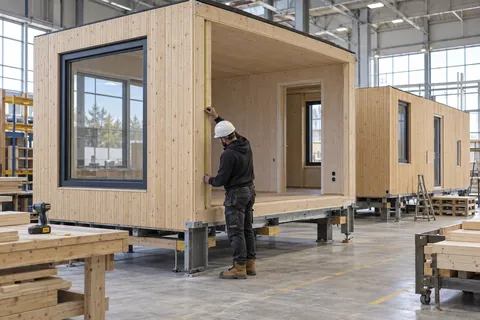
Factory-built housing becomes compelling when repetition, a reliable order book and difficult site conditions reinforce one another. Moving construction indoors can change how work is organized, but the commercial result still depends on design decisions, transport and the connection between factory and site.
Precision irrigation can improve decisions about when and where to apply water. Whether it saves water depends on what is measured, the conditions of the field and how effectively the farm already irrigates. Applied water, crop water consumption and yield per unit of water are different outcomes.
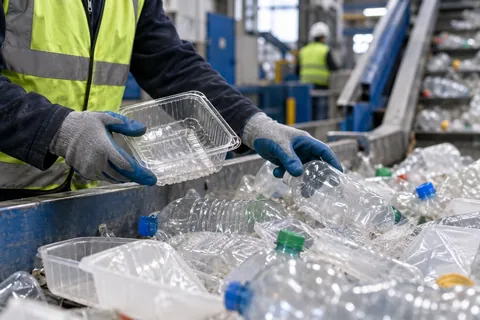
A package can be designed to recycle and still fail to reach a recycling process. Collection access, sorting behavior, material compatibility and demand for the recovered output each influence the result. Recyclability is therefore a relationship between a design and a working system.
A material made partly from plants tells a buyer something about its feedstock. It does not, on its own, establish durability, a lower environmental footprint, recyclability or successful composting. Those are separate properties that need separate evidence.
The return of over-the-top dicamba use for tolerant cotton and soybeans changes one part of the US crop-input market. It does not make every acre, day or product interchangeable. For growers, advisers and retailers, the commercial value of an approved input depends on whether it fits a workable and lawful crop-management plan.
India has withdrawn the Machinery and Electrical Equipment Safety Omnibus Technical Regulation Order, 2024. For overseas equipment suppliers and Indian buyers, the January notification changes an important assumption behind compliance planning, but it does not provide a blanket exemption from every product rule.
A printed component becomes a production part when a manufacturer can repeatedly deliver it with the required properties, documentation and cost. An impressive shape or a successful first build is an earlier milestone. Qualification is the work that connects the two.
A clash found on a screen has little value if the decision that resolves it never reaches the people installing the work. Digital construction delivers through that connection: between design information, an agreed decision, and a change in what happens on site. Buying modelling software is only one part of it.
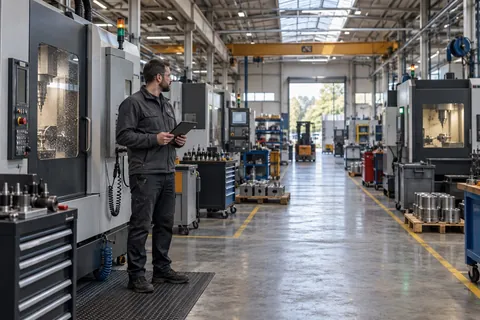
An apparently quiet factory can still need new equipment. A crowded one can make a poor investment. Capacity utilization becomes useful when it is connected to the products a plant can make, the constraints it faces and the orders it can profitably deliver.
A farmer receiving a quick digital answer has gained access to information. Whether that answer improves a farm decision depends on its local relevance, the farmer's ability to use it and the support available when the situation is uncertain.
Cybersecurity is becoming a more explicit condition of doing business in the US defense supply chain. The acquisition rule effective from 10 November connects CMMC status with applicable contract requirements, making information handling a commercial issue for manufacturers as well as a technical one.
There is no single recycled-plastic discount. A qualified recycled grade can cost more than its virgin counterpart, while another recycled material sells for less. Polymer type, color, permitted application, consistency and delivery terms determine whether two prices are meaningfully comparable.
A factory can deliver a well-made building module while the completed building still encounters problems at its connections. Recent research makes the boundary between factory production and site assembly an important place to examine modular construction claims.
Electric furnaces, hydrogen-based ironmaking and carbon capture describe different ways to change steel production. For a material buyer, the technology label is only the beginning: the actual inputs, operating status and emissions boundary determine what a supplier's claim means.
A fertilizer-price forecast is only the beginning of a farm-budget decision. The margin depends on the nutrient being purchased, the amount the field needs, the crop price and the timing of payment. A lower expected market price next year does not automatically make delaying every purchase the best choice.
The EU’s October changes to the Carbon Border Adjustment Mechanism simplify obligations for many smaller importers. For steel producers supplying customers that remain in scope, however, the commercial task is still substantial: connect the exported product to credible production and emissions information.
A flat global steel-demand forecast can conceal very different conditions for a stockholder, mill, fabricator, or buyer. The relevant question is which products, customers, and regions sit behind that average.
Manufacturing can be growing while many factories still experience weak orders. The apparent contradiction often comes from combining indicators that measure different countries, industries, periods, or types of activity.
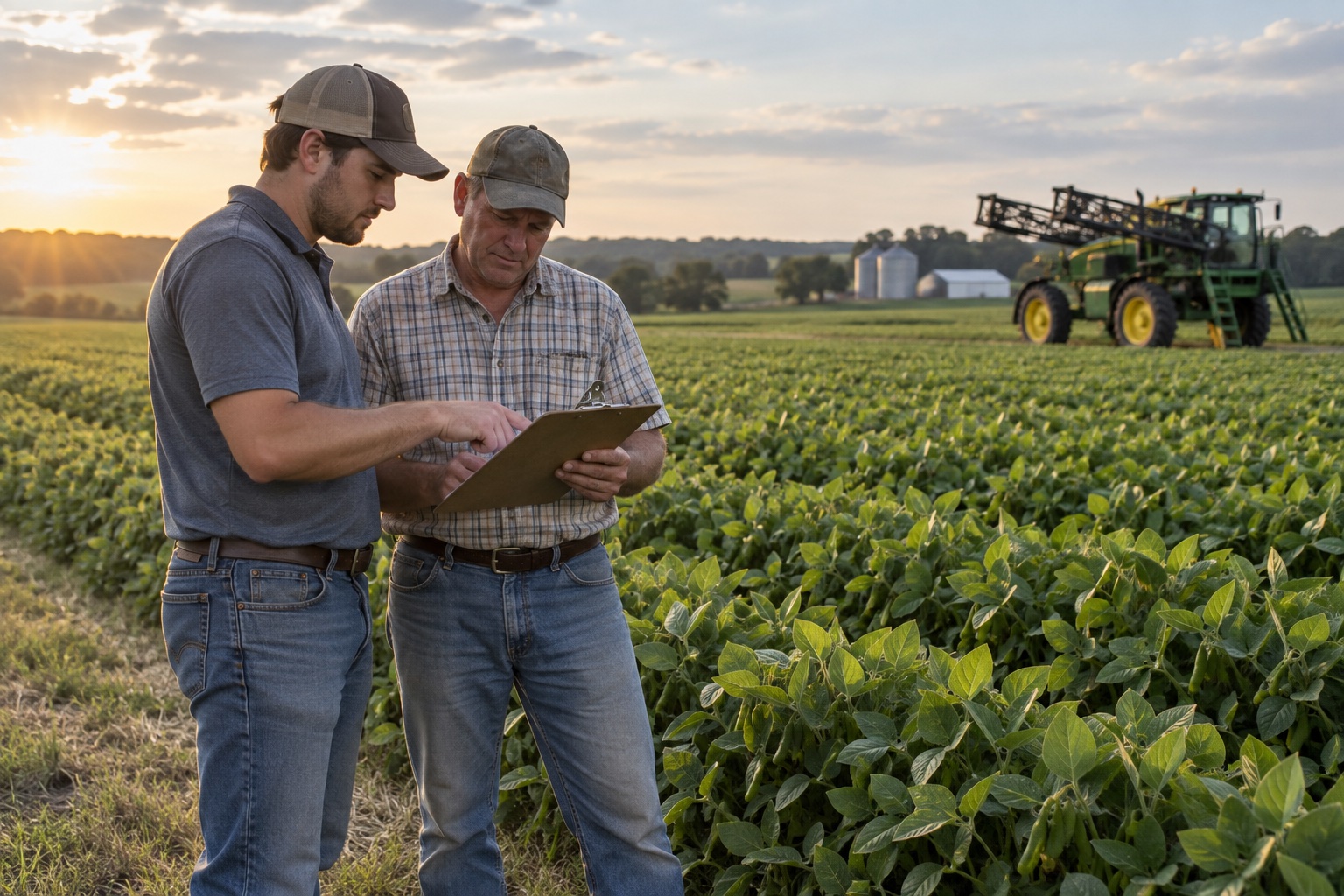
The most useful number in a targeted-spraying trial is not necessarily the largest percentage reduction in herbicide. It is the reduction achieved while maintaining effective weed control, protecting the crop and avoiding a larger weed problem in the following season.
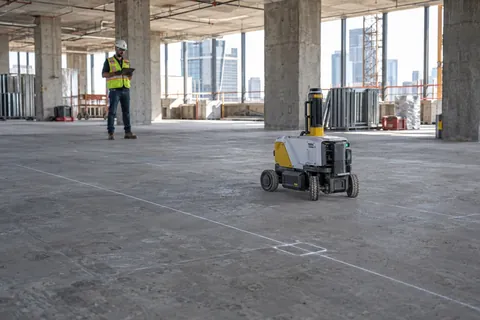
Construction robots are beginning to produce useful evidence beyond short demonstrations. The strongest examples still concern specific tasks under identifiable conditions. A robot that prints coordinated layout, assembles a test frame or surveys a structure should be evaluated against the work it actually performs.
A vibration sensor can report a change in a machine. Whether that information prevents a breakdown depends on what the maintenance team does next, how much warning it has, and whether the reported change actually indicates a developing fault. Connectivity makes information available. It does not complete the maintenance decision.
Strong export shipments can mean customers are consuming more, but they can also mean goods are moving earlier than usual. In 2025, distinguishing those explanations has become essential for manufacturers deciding how much capacity, inventory and working capital to commit.
Machine vision can help equipment interpret its surroundings, but a recognizable image is only one part of reliable guidance. The system must identify relevant objects, estimate position and distance, and support a decision that remains appropriate as the machine and environment change.
The latest robot-market figures show the scale of industrial automation. They do not, by themselves, establish whether a particular factory should buy a robot.
A rise in machine-tool orders can signal investment without implying that every equipment supplier faces the same market. Order value, machine count, customer industry and the timing of delivery describe different parts of the capital-spending cycle.
A machine may generate a continuous stream of operating data while its owner still struggles to obtain the information needed for a service decision. With the EU Data Act applying from 12 September, access to that information is becoming a more explicit part of the relationship between equipment users, manufacturers and maintenance providers.
Coffee traceability increasingly begins with a farm map, but it cannot end there. A buyer needs a credible connection between the land where coffee was grown and the product that moves through a cooperative, processor and exporter. For smallholders, participation also depends on whether the system is affordable, understandable and useful beyond a single data-collection visit.
A construction estimate is a bundle of different markets. Steel, timber, skilled labor and the money needed to carry work in progress can move in different directions. Applying one inflation percentage to the whole job can conceal the packages that put the margin at risk.
A digital twin earns its place in a factory when a synchronized model improves a specific operating decision. A detailed three-dimensional display can help people understand a process, but visual realism alone does not show that the model predicts the right outcome or remains aligned with the equipment.
Reducing clinker can lower the emissions associated with cement, but a useful construction material still has to meet the demands of its intended application. Strength development, durability, workability and reliable supply belong in the same discussion as the clinker percentage.
Agricultural AI is becoming easier to question in ordinary language, but a fluent answer is not the same as sound advice for a particular field. Crop, location, growth stage and the evidence available to the system can change what a useful response should contain.
A large project pipeline can justify watching a market more closely. Hiring crews, buying equipment, or reserving production capacity requires a different kind of evidence: a credible route from the announced project to work that will actually be procured and delivered.
The number of farms is a poor stand-alone guide to the market for agricultural machinery. Farms differ in output, enterprise mix, labor needs and the amount of work that equipment can perform each season. They also differ in whether buying a machine is the most practical way to obtain the service it provides.
A softer used-equipment market can create buying opportunities, but a falling index cannot tell a contractor whether a particular machine is good value. The useful comparison starts with equivalent capability and ends with the cost of putting dependable equipment to work.
The OECD-FAO Agricultural Outlook 2025-2034 points to expanding production, but farm businesses need to separate global growth from their own selling prices and costs.
A forecast of lower agricultural commodity prices does not tell an individual farmer what next season's income will be. It describes a market under stated assumptions. Farm income depends on a more specific combination of saleable output, the price actually received, and the costs incurred to produce and sell it.
A factory can scan every container and still struggle to answer a customer’s traceability question. The missing information may sit between systems: a material lot was split, a component was reworked or a supplier’s identifier was replaced during receiving without preserving the connection.
A large stock of aging buildings creates a need for work, but it does not automatically create a funded retrofit market. The commercial opportunity depends on who can pay, which problems need attention first and whether the proposed work delivers benefits that occupants value.
Lower mineral prices can make industrial procurement look easier while leaving supply chains highly exposed. Price describes the terms of trade today. Concentration describes how many alternatives remain if a major source becomes unavailable. The two signals can move in different directions.
A factory does not buy an inspection system to achieve a benchmark score. It buys a way to find unacceptable parts, avoid unnecessary rejection and keep production moving. New industrial anomaly-detection research makes the gap between those objectives increasingly clear.
The US tariff on specified automobile parts took effect on 3 May 2025, turning a policy announcement into an immediate supply-chain calculation. For manufacturers, the headline rate is only the beginning: product classification, origin eligibility, importer responsibility and the destination of the component can change the result.
A research paper can identify a promising cutting-tool design without proving that it will lower the cost of a finished part. The useful work for a machine shop begins with separating the measured result, the simulated result and the production question that remains unanswered.
South Africa’s citrus exporters enter the 2025 season with an updated set of operational documents for shipments to the EU. The commercially important story is precise: changes to the export procedure do not necessarily mean the destination market has introduced a new rule.
A collaborative robot is useful when its capabilities fit a well-defined task and the complete workstation can deliver the required production result. The arm's payload and reach are only the beginning. Tools, parts, people, fixtures and recovery from interruptions all shape the application.
The latest global buildings assessment brings attention back to a practical question: who checks whether an efficient design becomes an efficient building in use?
England’s latest changes to Approved Document B make fire-safety specifications an immediate procurement issue. A tender issued from an old template can miss a change even when the designer, contractor and product supplier each believe their own documents are current.
A digital twin can present a convincing picture of a machine while giving an unreliable answer about its next operating condition. Manufacturers need evidence that the model is suitable for the decision being made, alongside evidence that its data connection works.
The EU’s new Packaging and Packaging Waste Regulation has entered into force, giving plastic packaging suppliers a clearer view of future recycled-content requirements. The commercial challenge is larger than finding enough recyclate: the material must also perform in the intended package and meet the requirements of its intended use.