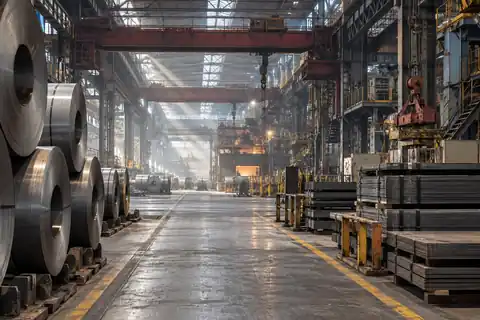
A steelmaking route is only the start of an emissions claim
Electric furnaces, hydrogen-based ironmaking and carbon capture describe different ways to change steel production. For a material buyer, the technology label is only the beginning: the actual inputs, operating status and emissions boundary determine what a supplier's claim means.
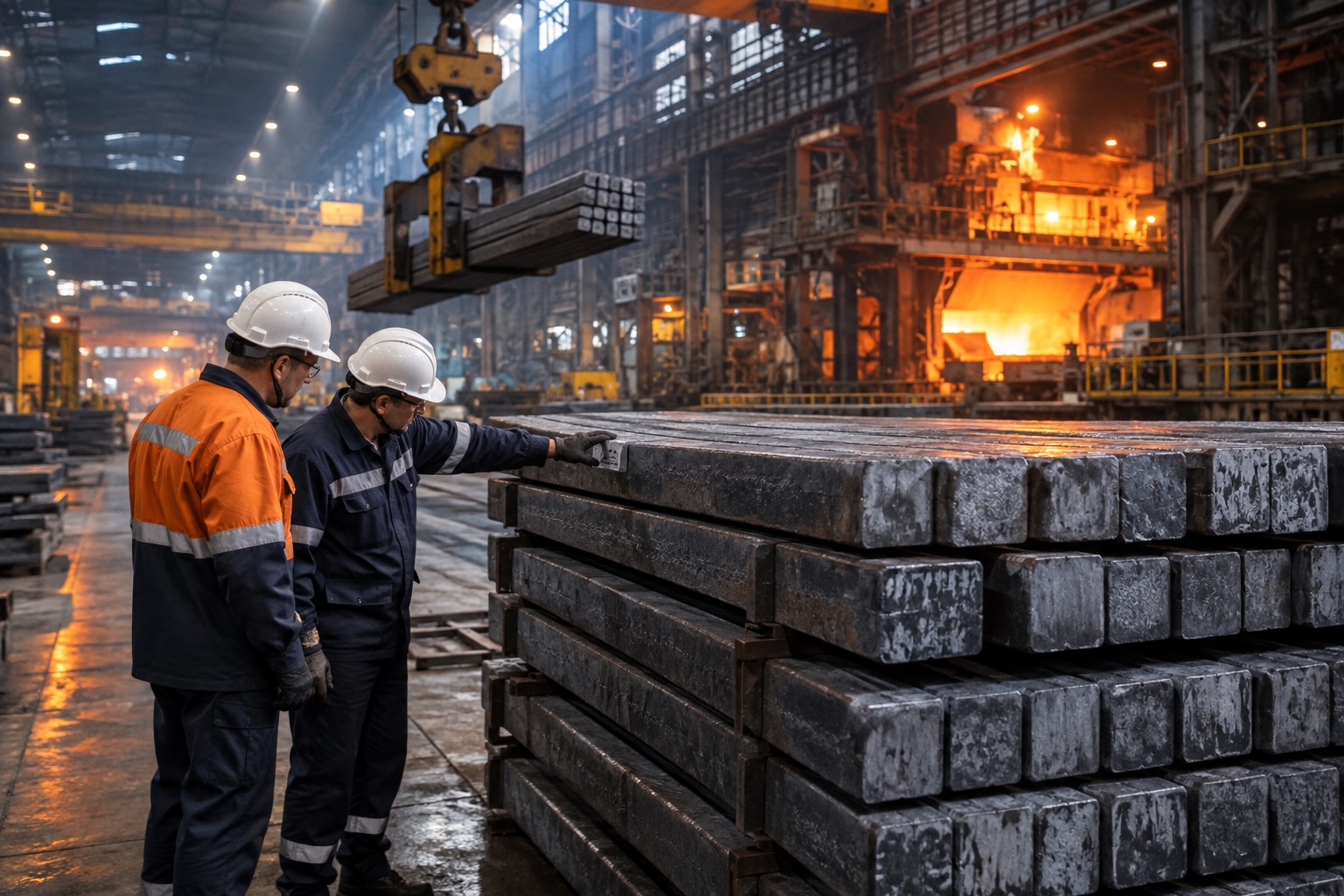
As of November 13, 2025. The IEA's Breakthrough Agenda Report 2025, released on October 30, distinguishes near-zero emissions projects from announced capacity that could become near-zero but lacks clear details or timelines for doing so. That distinction is particularly useful for readers trying to understand how industrial innovation translates into steel available for purchase. A project can be technically promising while its future operating conditions remain unsettled. A mill can use an electric furnace while its feedstock and electricity carry different emissions from those of another mill. A buyer therefore needs an explanation of the supplied material, rather than relying on the general reputation of a process route.
Separate the plant announcement from the supplied product
Industrial projects move through several stages before routine deliveries begin. An announcement, a pilot result and commercial operating data offer different evidence. Combining them into one list of green steel capacity can make future possibilities look like present supply.
The IEA report identifies access to low-emissions hydrogen and electricity, production costs and demand commitments as barriers to wider deployment. These are conditions that must be resolved around the process technology. The analysis does not mean that every announced project will reach operation on its original schedule.
For a purchaser, the immediate question is which facility and production period support the quotation. If a supplier describes a future conversion, the buyer should distinguish current material from material expected after that conversion. A contract covering later deliveries may need provisions for what happens if the intended production route or evidence changes.
Consider an illustrative fabricator ordering steel for a project with a fixed delivery date. A supplier's ambitious plant roadmap may be relevant to a longer relationship, but the fabricator still needs evidence for the material that will arrive during this project. Future capability cannot fill a gap in the current product record.
Follow the iron and energy inputs
The furnace is an important part of steelmaking, but it is not the whole production chain. Understanding the metallic inputs helps a buyer ask more precise questions about the associated emissions. Scrap and newly produced iron can enter different combinations of processes, and the preceding ironmaking stage matters.
Worldsteel's earlier sustainability indicators report presents emissions information with methodological qualifications and production-route distinctions. These industry indicators provide context, not a substitute for the data attached to an individual supplier's product. An industry average cannot establish the footprint of a particular delivery.
The practical implication is to ask what the quoted number includes. Does it cover the upstream production of purchased iron? How is electricity treated? Which processing steps are included before the steel reaches the specified product form? Answers should use a stated method and a defined reporting period, rather than a selection of favourable stages.
An illustrative comparison between two offers can reveal the problem. One number might describe crude steel leaving steelmaking, while another includes additional rolling and finishing. The lower number does not necessarily identify the better-performing supplier. The first task is to make the comparison consistent enough to interpret.
A useful buyer review keeps the unit, product form, system boundary and data period together. If any of those change, the apparent difference between offers may reflect accounting choices as well as physical performance.
Understand what a benchmark rewards
ResponsibleSteel's 2024 explanation of its emissions-principle revisions describes a scrap-variable approach to progress levels. Its purpose is to assess improvement across scrap-based and primary steelmaking. This helps explain why a sectoral transition benchmark may account for the amount of scrap used, rather than rely on one unqualified threshold for every production situation.
That is a different question from the footprint of the specific material a customer buys. A buyer may need both answers: how the production site is progressing, and what emissions are associated with the ordered product under the relevant method. Treating one answer as a replacement for the other can create confusion.
The IEA's 2023 report on emissions measurement and data collection addresses the need for better measurement and comparability in steel. Its relevance continues as different initiatives seek to describe lower-emissions production. A shared label is less useful when the calculations underneath it are not comparable.
For an internal purchasing review, the team can record the claim, the assessment scheme, the assessed entity and the evidence provided. Is the claim about a site, a production route, a product or a future commitment? This simple distinction helps prevent a valid statement at one level from being stretched into a different claim.
Read pilot achievements at their demonstrated scale
SSAB's August 2024 account of the HYBRIT research programme describes results from a pilot phase and a move toward industrial implementation. It reports work on hydrogen-based iron production and related process development. As a statement from a project participant, it is evidence of what the company reports, rather than independent confirmation of routine performance across a commercial fleet.
Pilot work is valuable because it can answer technical questions that a concept alone cannot resolve. It can also expose the next questions. A process shown at one scale still needs a reliable supply of inputs, integration with the intended plant and evidence of sustained operation at the required output.
A reader should therefore avoid two opposite errors. Dismissing a pilot because it is not yet full-scale ignores its contribution to learning. Treating it as proof that all commercial and operational questions have been resolved assigns it more certainty than it provides.
A practical review can ask what was demonstrated, over what period and under which conditions. It can then identify what must be shown at the next stage. This preserves the significance of the innovation while keeping the production-readiness discussion specific.
Turn the claim into a usable purchasing record
For buyers, a useful evidence package should make the material identifiable and the environmental claim interpretable. It can include the product specification, producer, relevant reporting period and the declared method. The supporting records should explain the scope of any verification, including what the verifier actually assessed.
The purchasing team should also ask how the claim connects with the ordered quantity. Different commercial arrangements may allocate environmental attributes in different ways. The supplier should explain the arrangement clearly, including what the customer may claim and how duplication is prevented. Buyers should not assume that every programme links attributes to an individual physical batch in the same manner.
These questions are especially important when the customer will pass information to a designer, contractor or downstream manufacturer. An ambiguous supplier statement can become a more definite marketing claim as it travels through the chain. Retaining the original scope and qualifications helps avoid that drift.
Price comparisons should use the same discipline. A premium for a defined product and verified attribute is easier to assess than a premium attached to an undefined green label. Delivery certainty, technical suitability and documentary requirements remain part of the procurement decision alongside environmental performance.
The steel transition is producing meaningful technical progress, but the evidence arrives at different levels of maturity. A good materials decision connects a route with its actual inputs, a project with its operating status and a product claim with a clear calculation boundary. That is how a promising industrial change becomes information a customer can responsibly use.