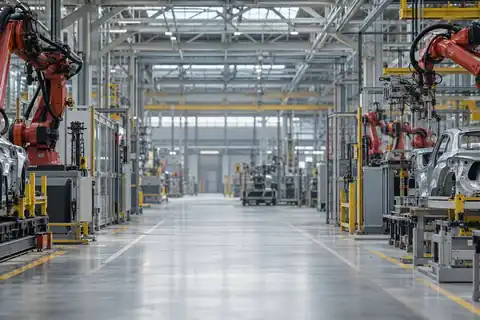
ProMat 2025: material handling meets practical automation
Robotics and automation stood alongside conventional handling equipment, bringing integration into focus for factories and warehouses.
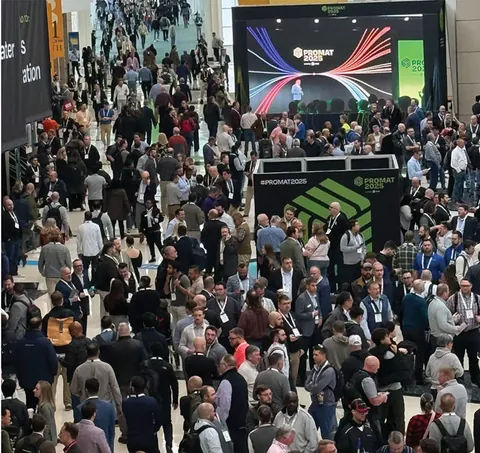
ProMat 2025 took place March 17–20 at Chicago’s McCormick Place. The event offered manufacturing and warehouse teams a broad view of how materials move, from individual handling tasks to connected operations.
A record gathering, measured carefully
MHI reported 52,223 registrations, 1,160 exhibitors and 659,000 net square feet of exhibits across three halls. Its conference program included 215 educational sessions. The registration figure is the organizer’s measure, not a separate count of unique visitors verified here.
The breadth of the floor allowed buyers to consider established handling methods alongside new automation, an important combination for facilities that must improve without replacing everything at once.
The buying conversation moved toward integration
MHI’s Daniel McKinnon described large buyer teams arriving with plans and budgets. The organizer identified automation, robotics and AI as prominent themes.
That is an organizer’s assessment of buyer activity, not an independent measure of investment completed. For an operations team, the more useful question is where a proposed system fits between receiving, storage, production and dispatch.
Innovation awards widened the discussion
Anyware Robotics won Best New Innovation; Concentric won for innovation in an existing product; Fidus Global received Best IT Innovation; and GRI won the sustainability category. Freespace Robotics received the StartUp Award.
The range of recognition shows why an automation shortlist should include software and improvements to existing equipment as well as entirely new machines. An award provides a reason to examine an approach, rather than evidence that it suits every facility.
Test the handoffs
A robot may complete an individual movement quickly while waiting on replenishment, a scanner or a downstream process. An application review should therefore examine the handoffs around the equipment, not only its advertised cycle.
Map the normal route and the exceptions: damaged loads, unexpected dimensions, missing labels and temporary congestion. Ask suppliers to show how an operator recovers the process when something falls outside the demonstration conditions.
From shortlist to operating plan
Before a pilot, agree what success means for the facility. Useful measures could include completed orders, handling touches or time lost to interruptions, selected to match the actual problem.
Include maintenance staff and the people working beside the system in that plan. Their experience can turn a promising demonstration into a more realistic specification.
Source: MHI/MHI Solutions, ProMat 2025 report and Innovation Awards; photos: MHI Solutions