MD&M West 2026: bringing simulation closer to manufacturing decisions
An exhibitor’s account of simulation, design and AI discussions offers a practical way to read the manufacturing show.
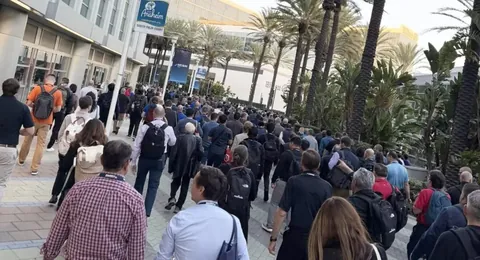
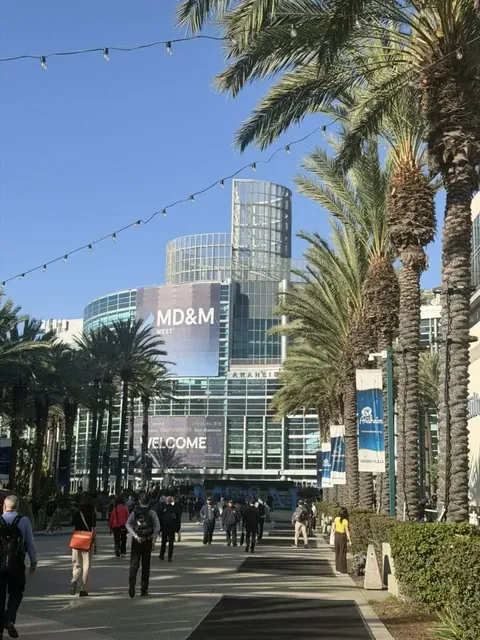
MD&M West ran February 3–5, 2026, at the Anaheim Convention Center. Its connected design, automation, plastics, packaging and medical-technology sectors provided a setting for examining how an engineering decision moves toward production.
A view from an engineering exhibitor
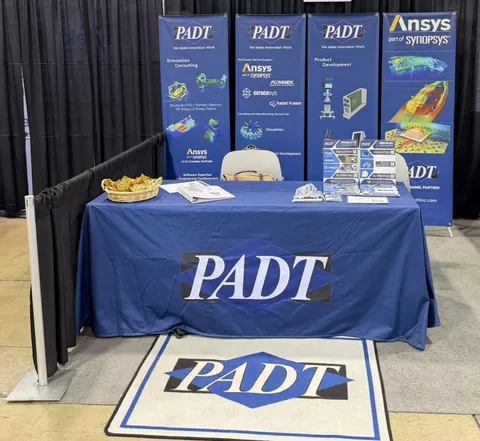
PADT’s Eric Miller reported that roughly half of the conversations at the company’s booth concerned simulation, with the remainder divided between design and 3D printing. This is a description of one exhibitor’s experience, not a survey of the entire event.
It nevertheless offers a useful starting point. Before changing a physical process, engineering teams often need to understand how a component will behave and how the proposed manufacturing method affects its design.
AI moved into specific engineering tasks
Miller highlighted a demonstration by Bananaz involving assistance with drawing checks and tolerancing. His account emphasized tools for engineering work rather than treating AI as a separate destination.
For a manufacturer evaluating such a tool, the question is which decisions it supports and how its output will be reviewed. A convincing interface is only one part of the assessment; the team must also understand what information the tool needs and where engineering judgment remains essential.
Business conversations, with limits
Miller also described hearing that business was picking up among people he spoke with. Those conversations are useful qualitative observations, but they do not establish a market-wide recovery.
A more useful follow-up for a supplier is to separate active projects from early interest. Ask what has changed in the customer’s requirements, who is involved in the decision and which technical question needs resolving next.
Connect the model to the manufacturing route
Simulation and additive manufacturing become more useful when the team defines the production question first. That could involve a design change, a fixture or an early prototype whose performance needs to be understood.
A trial should connect the digital assumptions with a physical result and a clear review process. Manufacturing staff can help identify whether the proposed design creates avoidable problems in setup, access, inspection or repeatability.
What to take into the next review
Choose a representative problem and agree the evidence needed to answer it. Keep the original assumptions visible, record changes and ensure the result can be explained to someone outside the demonstration team.
That discipline gives a new engineering tool a defined role. It also makes the discussion between design and production more useful than a comparison based only on the novelty of the software.
Source: MD&M West event information; Eric Miller/PADT exhibitor recap; photos: PADT