
Cultivate 2026: nursery containers and the work around them
An exhibitor’s account of the Columbus event puts containers, material trials and recycling into a production context.
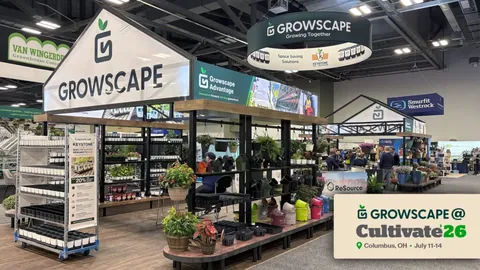
Containers are a small-looking part of a nursery’s operation with connections to handling, presentation and what happens after use. Cultivate provided a place to examine those connections alongside the wider requirements of growing businesses.
A production-focused view of Columbus
AmericanHort held Cultivate July 11–14 at the Greater Columbus Convention Center. In its post-show account, Growscape described displays including its Keystone Pot and Tray System, NuCera planters and EarthSafe platform.
This is a focused view from one exhibitor, rather than an assessment of every product or business represented at the event.
Material innovation needs a trial
Growscape’s recap describes a discussion involving its sustainable-solutions director Tom Marting and Kaimarra Advanced Materials CEO Bates Marshall, moderated by the University of Guelph’s Rodger Tschanz. The conversation addressed ReTerra bioplastic containers and next steps for trials.
For a grower, a material trial should reflect the intended crop cycle and handling conditions. Agree on the observations needed before drawing conclusions about suitability across the operation.
The work after the container is used
The exhibitor also reported conversations about its ReSource Recycling program and ReAssure compliance support.
A recycling proposal needs to be understood as an operating process. Ask what can be accepted, how materials should be separated and stored, and how collection would fit the site. A service description alone does not establish the outcome for every location or waste stream.
Keeping education available
AmericanHort’s Cultivate On-Demand program offered more than 50 recorded sessions, including Spanish-language content, after the event.
Recorded education can help involve colleagues who did not travel. Selecting a relevant session and discussing what it means for a particular workflow is more useful than leaving the learning with only the person who attended.
A measured approach to change
The practical next step is a small, documented evaluation. Identify the problem the proposed container or service is intended to solve, assign responsibility for the trial and review the results before expanding it. This keeps material decisions tied to growing operations and avoids turning a supplier’s broad sustainability message into an unsupported site-level claim.
Source: Growscape Cultivate 2026 recap and AmericanHort education information; photo: Growscape