Greenbuild 2025: building performance through real project experience
A participant’s account connected material choices and retrofit questions with the wider sustainability program.
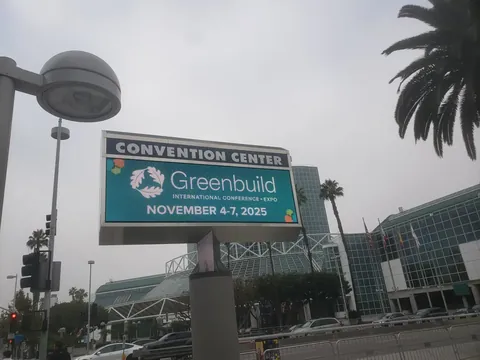
Greenbuild took place at the Los Angeles Convention Center on November 4–7, 2025. For construction readers, its most useful angle is how broad performance goals become decisions about real buildings and the materials used in them.
A project-led contribution
HKP architects reported presenting at the Passive House Summit on November 4 with Julie Kriegh of Kriegh Architecture Studios. Their contribution concerned Mount Vernon Library Commons and formed part of programming on non-residential passive buildings.
HKP’s recap identified embodied carbon, inclusive design and LEED v5 among the event’s themes. It also drew attention to sessions on historic-building retrofits and case studies of completed projects.
Look for the decisions behind the result
A project presentation is most useful when it explains the constraints that shaped the design. For contractors and materials suppliers, that means asking what was retained, what was replaced and how the team documented the work.
Comparisons should use the same project scope and clearly stated assumptions. A promising material or assembly still needs to be assessed for the building where it will be used.
Translate the discussion into a brief
The next step for a project team is to identify which performance goals require action from each participant. Put information requests, product documentation and review responsibilities into the brief early.
Greenbuild’s relevance to backbone industries lies in that translation. Manufacturing a product and installing it well are part of delivering a building outcome, and the handover between those activities deserves as much attention as the headline ambition.